
Lake County City Directory Shelves
Lake County directory work starts with coverage, not a broad name search. Waukegan is the best documented local run, but the dates and formats differ by keeper. The Illinois State Geological Survey inventory identifies Polk and Harris editions and points researchers toward Waukegan Public Library. Newberry and Raymond Research Library supply other years and formats.
| Collection | Years | Where Held | Access |
|---|---|---|---|
| Waukegan city directories | 1874; 1889 to present, with gaps | Waukegan Public Library and Raymond Research Library | Ask for the exact year onsite |
| ISGS Waukegan inventory | 1874; selected runs from 1892 to current | ISGS inventory, pointing to Waukegan Public Library | PDF date guide, then library access |
| Newberry city and business directories | 1855-56 business; selected Lake County years, 1892-1996 | Newberry Library | Catalog and onsite access vary |
| Prairie Farmer directory | 1917 | Newberry, FamilySearch catalog, local copies | Rural township and farm format |
| Waukegan telephone books | 1911, 1926, 1929, 1937, 1942, 1951, with later gaps | Raymond Research Library | Inquiry and appointment |
The known city-directory sequence includes many breaks. It is safer to state that a year is documented than to infer all years between two endpoints. Telephone books can bridge some gaps, yet unlisted numbers and business listings make them incomplete resident rolls.
Lake County Directory Formats Differ
Polk, Harris, and Prairie Farmer did not build the same kind of book. A Polk or Harris volume may sort an urban resident by surname and give a street address, trade, employer, or spouse. The 1917 Prairie Farmer publication is rural. It organizes clues around township, section, acreage, route, telephone, spouse, and children. That difference matters across Lake County, where a farm household may not fit a modern Waukegan street search.
For a rural entry, copy the township and section exactly. Then compare those details with a plat atlas and the current parcel system. Do not turn an old rural route into a present street number without that map or parcel bridge. A modern street-level search belongs in the Lake County directory by street, while the old books need their own reading method.
Note: The publisher's front matter controls each symbol, so the same letter should not be assigned one meaning across every volume.
Read Lake County City Directory Entries
A useful transcription preserves what the printed line says and what remains unclear. Start with the page and year. Then record the surname spelling, given name, spouse, address or route, trade, phone, and all householder or occupancy marks. Bracket a hard-to-read character. Nearby entries can reveal relatives, a shared business, or the printer's usual short forms.
| Printed identity | Name as set in type, including initials and spouse in parentheses |
|---|---|
| Work or farm clue | Occupation, employer, acreage, ownership, or occupancy notation when printed |
| Place clue | Street and number, rural route, township, or section |
| Household clue | Spouse, children, widow mark, householder, or residence notation |
| Contact clue | Telephone or business address, where the edition supplies one |
- Criss-cross directory
- An address-ordered or street-ordered section used to move from a place to a listed name.
- Householder index
- A list focused on the person associated with a household, with symbols defined by that book.
- Abbreviation key
- The publisher's legend for short forms and marks. Check it before interpreting an entry.
Lake County holdings do not document one complete, uninterrupted reverse-directory series. Ask staff whether a given volume has a street section or address index. A name-only book may still include such a section, but its presence must be checked in the volume.
Raymond Library's Lake County Files
The Raymond Research Library at the Waukegan Historical Society holds more than directories. Its People File, early death notices, funeral-home records, census material, family histories, yearbooks, atlases, and historic-district house files can explain why a listed person appears, moves, or disappears. Access is by inquiry or appointment, with Wednesday through Friday hours listed as 11:00 to 2:30.
The source page shows the collection and its research route.
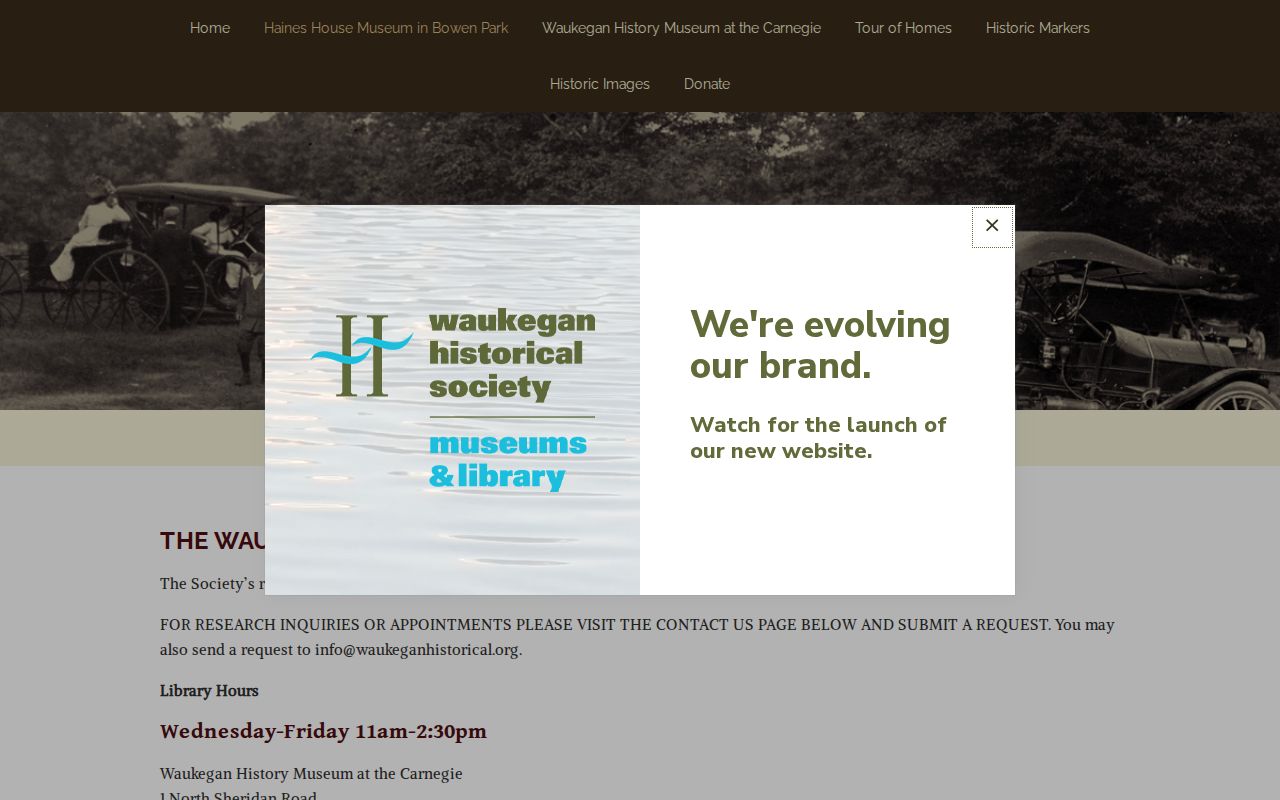
This view helps a researcher decide which local file should follow a directory hit. Send the exact name, year, address, and volume already checked so staff can test the right file.
Waukegan Library City Directory Research
Waukegan Public Library genealogy services combine directory shelves with census sources, maps, photographs, vital references, and newspapers. HeritageQuest is available through the library. Ancestry Library Edition is available at the main and Hinkston branches. The News-Sun archive has text from 1997 forward, full color from 2018 forward, and older material on microfilm.
The library's genealogy page is the best first check for its current database and staff-help options.
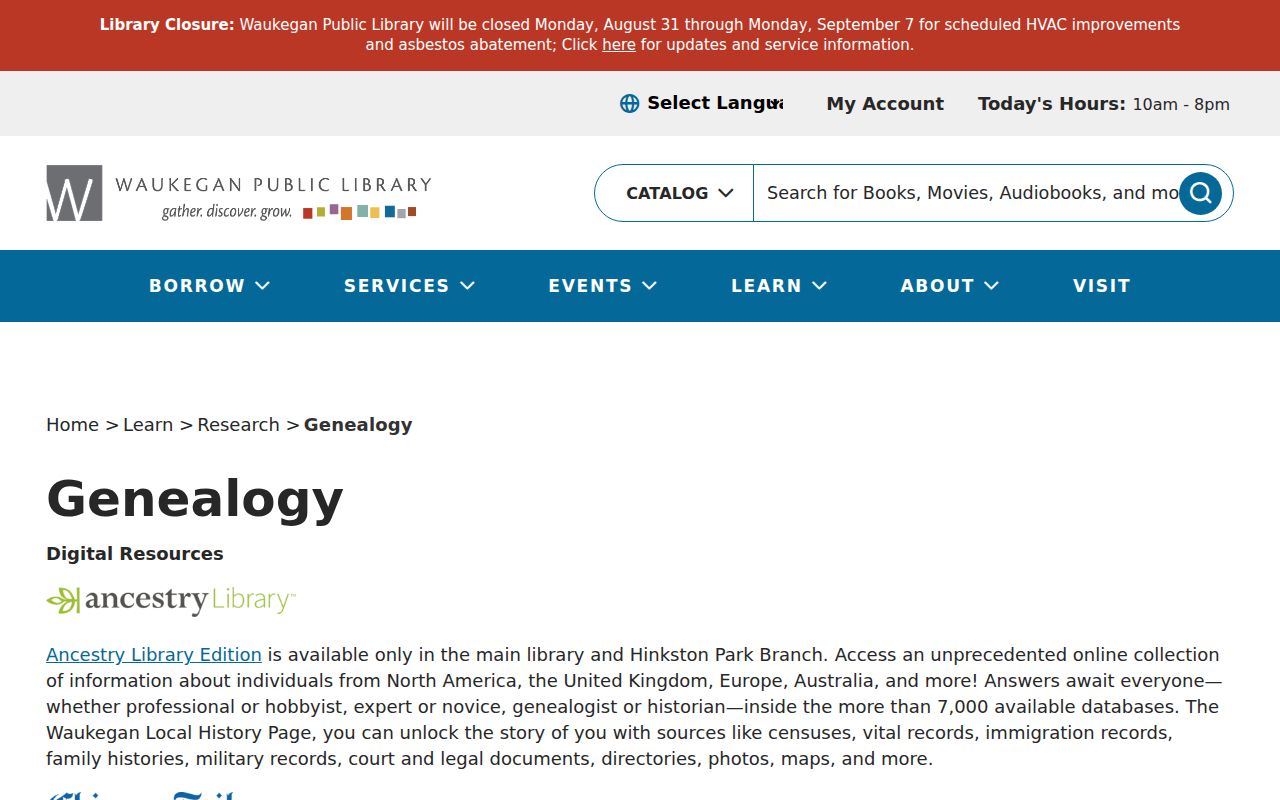
A newspaper search can test a business address, death notice, or move found in a city directory. Ask a librarian for the exact directory year as well as the newspaper date range.
Fill Lake County Directory Gaps
No single catalog settles every missing year. The Newberry Lake County genealogy guide names the 1917 Prairie Farmer volume and other county material. Its separate directory inventory maps selected Lake County dates. FamilySearch city and business directories span a much larger collection, but access to images can require sign-in or vary by item.
Search the FamilySearch catalog by Waukegan, Lake County Illinois, title, author, keyword, or year. An index hit is not the page itself. OCR can skip a faint name, and a catalog record may describe a book that is not fully viewable online.
The Newberry source view illustrates why a local research guide can be more precise than a broad web search.
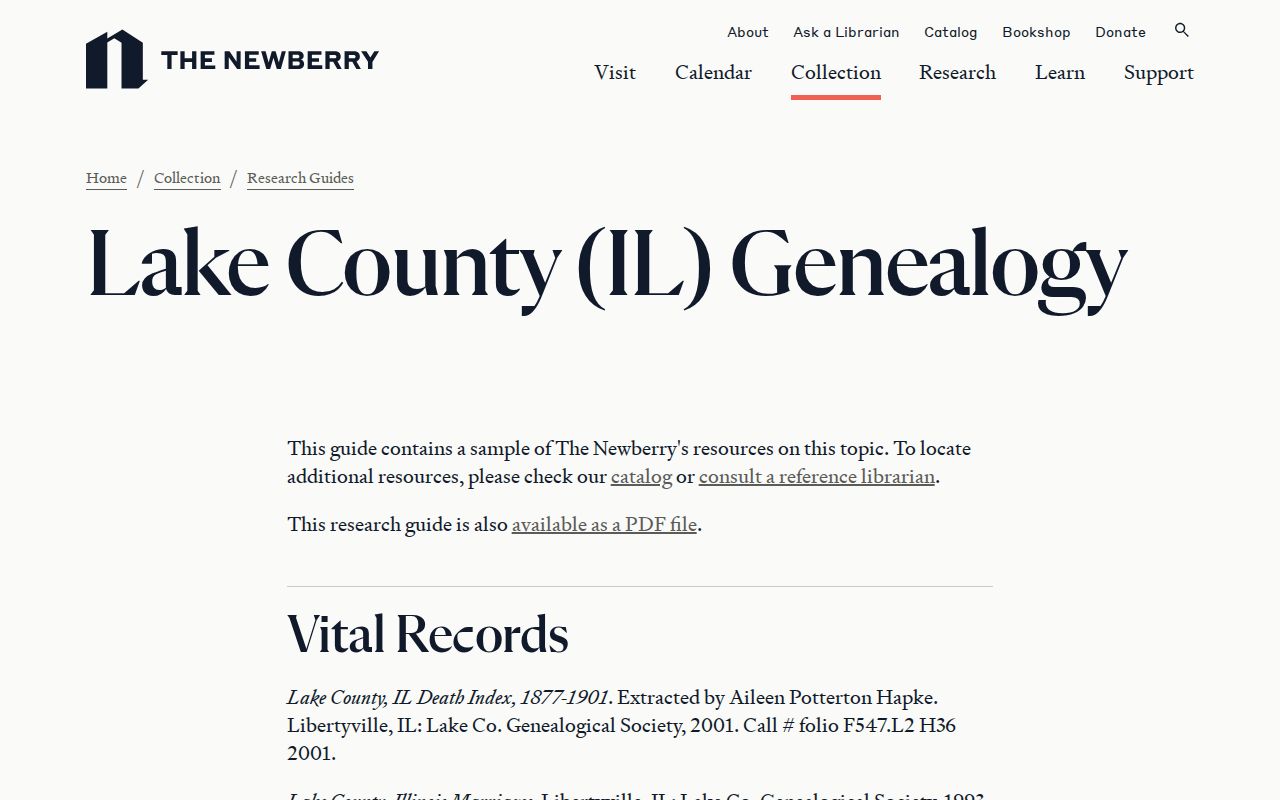
When an online image is blocked, note the title and call number, then ask Newberry, Waukegan Public Library, or Raymond Library about that edition.
Search tip. Check one year before and after a gap, then use newspapers, phone books, census records, or deeds to test continuity.
A Rural Lake County Directory
The 1917 Prairie Farmer volume is the local collection's clearest format surprise. Its entries can tie a family to a township and section, list acreage, name a spouse or children, and give a telephone. That is richer for farm research than a bare name-and-street line, but it requires a plat map to reach a modern parcel.
This city-directory companion fits Lake County's rural and urban split. Pair its township and section with Raymond Library's atlases from 1861 through later twentieth-century years. Then verify the legal description in a deed or parcel record. Keep each date attached to its source.
Lake County Directory Time Markers
The local shelf grew through several formats. These markers are not a claim of complete annual coverage. They show when a researcher can change sources as the record trail moves through time.
| Year or span | Collection marker |
|---|---|
| 1874 | Earliest named Waukegan city directory in the local inventory |
| 1889 to present | Broad Waukegan run described with gaps |
| 1911 | Early named Raymond Library telephone directory |
| 1917 | Prairie Farmer rural Lake County directory |
| 1959 to current | ISGS lists a later Waukegan run, subject to library holdings |
The Raymond holdings request missing Waukegan telephone directories for 1913-23 and 1957-67. That open request is strong evidence that even a long overall span has holes.
Trace Lake County Families by Directory
Follow a household one dated source at a time. A city directory can place a name at an address, but it does not prove that every household member appears or that a one-year absence means a move. Federal census schedules add age and relationship clues for released years, while deeds and obituaries can test an identity.
- Find the nearest likely directory year and save the page, publisher, spelling, and address.
- Check the years on both sides. Record a move, spouse mark, occupation change, or new phone without assuming its cause.
- Pair the directory with a released census year, following the federal 72-year rule.
- Use a newspaper, funeral-home file, obituary, or probate record to explain a death or household change.
- Use a deed image to distinguish a transfer of title from a change in who occupied the address.
The Waukegan official staff directory is a modern civic contact list, not a historical resident roll. Its source view shows why current names must be dated.
For family history, stay with dated historical volumes and verify a modern contact through the office that publishes it.