
Lake County Address History Sources
A Lake County address crosses several record eras. The current parcel card supplies the best starting identifier. Deeds then follow ownership, while city directories, census schedules, maps, permits, and death records help identify past residents. Choose a row by the period under study, and state each gap rather than filling it with a guess.
| Source | Years It Covers | Where Held | What It Shows |
|---|---|---|---|
| Live land-record index | 1980 to current; certified table inspected through July 2025 | PublicSearch and Recorder | Deeds, releases, plats, names, PIN, legal description |
| Historical grantor-grantee books | 1841-1979 | Online Index Books, office terminals, books | Earlier parties and document references |
| Waukegan directories | 1874; 1889 to present with gaps | Waukegan library and historical society | Occupant, address, trade, phone, household marks |
| Census records | Named local federal and state runs, as released | Libraries, LCIGS, Newberry, databases | Household names, ages, relationships |
| Sanborn maps | Waukegan 1885-1949; named UIUC years and 1969 reel | Raymond Library and UIUC | Street number, footprint, use, materials, outbuildings |
| Aerials and permits | Aerials 1939-2010; public Waukegan reports 2023-26 | County Planning; Waukegan Building | Site change, work date, project, address or PIN |
| Obituary and probate files | Local notices from the 1840s; IRAD probate 1840-1900 | Libraries, historical society, IRAD, Circuit Clerk | Death, heirs, executor, family and former place |
Not every source proves occupancy. A deed records a transfer, and a tax mailing address may point elsewhere. A directory or census can show a household that did not own the parcel.
Start Lake County Past Residents Here
Search the physical address in the Lake County property-tax portal. Save the PIN, property location, current owner label, mailing address, subdivision, lot and block, legal description, tax year, and any linked conveyance data. The property location is the site. The mailing address is where notices go, so it does not prove that the owner lives at the parcel.
Confirm the lot in the Tax Parcel Viewer v2. Its parcel, road, address, subdivision, lot, and historic tax-map layers can bridge a street label to a PIN. The viewer is a general reference, not a survey. For past residents, its main value is keeping the same parcel in view when the name or street number changes.
Note: Write the tax year beside each value or owner field because Lake County offices can display different years in the tax cycle.
Reverse the Lake County Deed Chain
The Lake County Official Records Search supports the modern ownership trail. Begin with the acquisition deed of today's owner. A deed image is stronger than a result-row name because it carries the legal description, document number, and parties needed for the next link. Search broad spelling forms when a trust or initials interrupt the chain.
- Use the parcel card and GIS to capture the PIN, legal description, and current owner label.
- Search that owner as grantee in a likely date range. Open the acquisition deed and record its grantor, date, document number, and parcel text.
- Search the seller as a grantee in an earlier range. Verify the next deed image before moving back again.
- Follow seller to buyer one transfer at a time. Keep mortgages, releases, liens, and easements as side records, not automatic ownership changes.
- At the 1980 index boundary, move to Online Index Books, recorder terminals, and physical grantor-grantee books.
- Grantor
- The party conveying an interest in the recorded document.
- Grantee
- The party receiving that interest.
- Chain of title
- The linked sequence of transfers for the same legal parcel.
- Legal description
- The land description that can remain stable when a street label changes.
The Recorder's search pamphlet directs pre-1980 research to older indexes and office tools. Searching at public terminals is listed as free. The Recording Division also handles counter, phone, email, fax, and mail copy routes.
Lake County's Two-Speed Deed Archive
The modern search box does not erase the earlier record trail. Lake County separates a searchable index beginning in 1980 from historical records labeled 1841-1979. Plats have a different span, beginning in 1841 on the certified table. This is an insider point worth using early: when a modern result stops, change the finding aid.
At the Recorder, ask for the Online Index Books or the grantor-grantee volumes tied to the last confirmed party. Bring the document reference, legal description, subdivision, lot, block, and spelling variants. An address-only search is weak for old work because early documents may be indexed by party and legal land text instead.
Archive tip. A blank modern result before 1980 signals a change of index, not proof that the Lake County deed never existed.
Waukegan's Past Residents Method
The Waukegan house-history guide links deeds with tax values, census schedules, wills, phone books, Sanborn maps, newspapers, obituaries, and preservation records. It suggests that a sharp value change may flag an improvement or build event. Treat that as a lead, then test it with a permit, map, deed, tax card, or news item.
The guide also keeps an old home search practical. Note book and page references, compare maps for number or footprint changes, and ask the Waukegan Historical Society or library for a named volume rather than an open-ended search. Previous residents become clearer when every fact retains its date and source.
Map Lake County Previous Residents
Sanborn fire-insurance sheets supply a building layer between deeds and names. Raymond holdings describe Waukegan maps from 1885-1949. The University of Illinois holdings list Waukegan editions for 1890, 1892, 1894, 1900, 1906, 1912, 1917, 1924, and 1929, plus a 1969 reel. The 1929 material includes North Chicago.
The source view shows which Lake County map years and access links exist.
A Sanborn sheet may show a house number, footprint, materials, use, and outbuildings, but not each person who lived there. Pair the sheet year with the nearest directory or census.
Bridge a Lake County Number Change
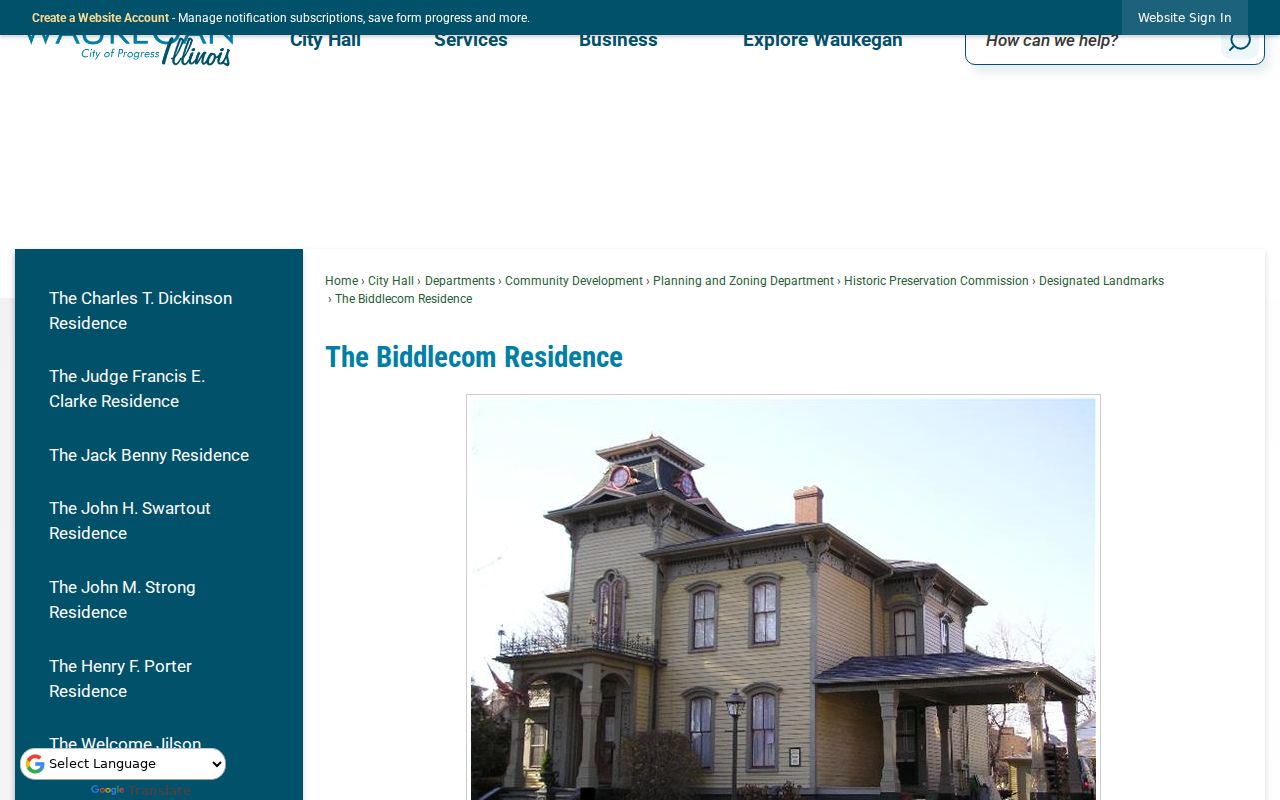
Waukegan's Biddlecom Residence is a clear warning against one-number searching. The city's Biddlecom history says 713 N Genesee became 614 N Genesee around the 1922 renumbering. The home was built in 1872, and the local account links its history across that change.
The page gives a real Lake County address bridge, not a hypothetical one.
Search both numbers in directories, maps, and newspapers. Then use the PIN or legal description to keep the parcel constant. This step can recover past residents who seem to vanish when only the present number is used.
Lake County Past Household Trail
Ownership is only half the address history. City directories and phone books can place listed occupants between census years. Released federal schedules may add ages and relationships. Obituaries, funeral-home files, and probate can explain a departure or transfer. The exact volumes and publishers are covered on the Lake County city directories page.
- Choose the nearest directory year and transcribe every listed name at the address.
- Check the years on both sides. Preserve direction, suffix, rural route, and old house number.
- Compare a released census year, following the federal 72-year rule, for household relationships and ages.
- Use a newspaper, obituary, funeral file, or probate record to test a death, heir, or move.
- Compare the result with the deed chain, but do not merge owner and occupant without evidence.
Raymond Research Library holds a People File, early death notices, Peterson and Tobin funeral material, and historic-house files. IRAD adds probate and court records. These routes are useful when a directory run ends or skips the needed year.
Lawful use. Research Lake County previous residents for family or house history, and never use a record trail to track or harass a living person.
Lake County Records Survived Fire
A county history reports that the courthouse burned on October 19, 1875, yet records were saved in an adjacent building. That story matters when an online deed search stops at 1980. It means an early Lake County trail should be pursued through the Recorder's old books, Bess Dunn Museum, or IRAD instead of being declared lost.
Ask which record series survives and where its finding aid now sits. Archive custody can shift even when the underlying record endured. Keep a note of the office, collection, box or volume, and request date so the result can be found again.
Close Lake County Resident Gaps
A strong address history marks all missing years. One absent directory entry does not prove a move or death. Search the next annual volume, a phone book, a newspaper notice, and a released census. If a person died, an obituary can name family and former places. Probate may identify heirs or an executor, while a later deed shows how the parcel transferred.
For Waukegan, public permit reports cover 2023-26. Older permit depth is not stated, so use a department or FOIA request. County aerials from varied years between 1939 and 2010 can show a demolished structure, new road, or subdivision change. Each image has its own date and purpose.
The result should remain two linked timelines: title and occupancy. That makes the Lake County previous residents trail honest even when a year, household member, or map sheet cannot be found.