
Finding Lake County Residents
Begin with the fact least likely to change. Put an exact address into the Lake County Property Tax Information search, which accepts an owner, billing name, street, city, ZIP, township, or property index number. Put a full name into the recorder, court index, genealogy index, or an old directory. Record the date of every result. A current tax card and a 1917 directory describe different moments.
Ownership is not occupancy. A parcel card may name an owner whose mailing address differs from the physical, or situs, address. Renters and family members may not appear. The Lake County residents directory is best used as a chain of official checks, not proof from one hit.
- Search the tax roll and note the PIN, situs, owner, mailing address, and tax year.
- Use Lake County Voter Power for personal registration details.
- Search recorded documents by party, parcel, address, or legal description.
- Consult library directories and archives for an earlier household.
- Ask the correct custodian for a record that is not indexed online.
Lake County Records Desks
Several divisions share the county complex at 18 N County Street in Waukegan. The Recording Division keeps deeds, liens, plats, and land records. The assessor system describes parcels. The Clerk handles elections and vital records, while the Circuit Clerk is the separate keeper of court files. Calling the right division saves a rejected request.
What Lake County Keeps
The county's office-by-office inventory separates assessment, election, recording, permit, court, and administrative files. It prevents broad requests sent to the wrong keeper. Illinois FOIA opens existing, nonexempt records, but it does not make an agency assemble a profile. Name the record, office, date span, and format.
The official inventory appears in this captured view.
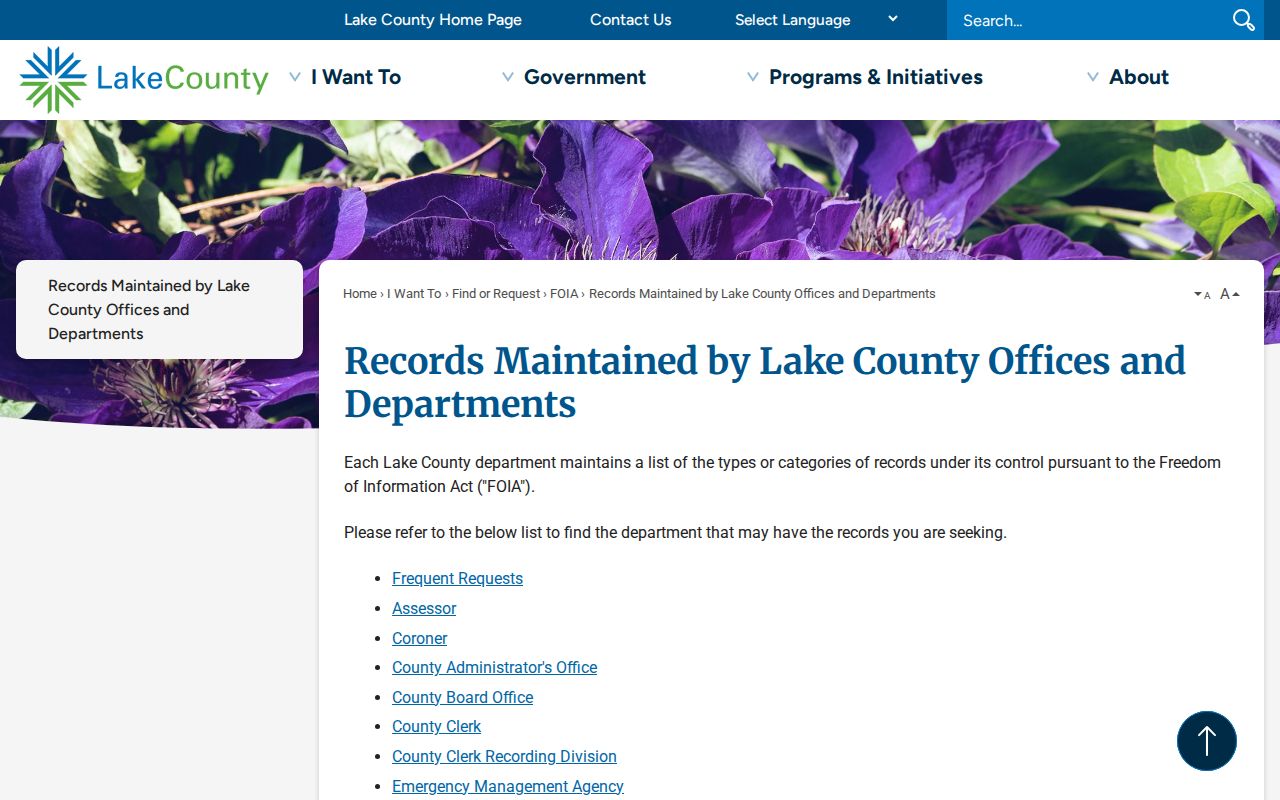
Use its department labels when directing a request to the custodian.
Lake County Deed Search
The recorder connects people and entities to land. Quick Search accepts a broad term and dates. Advanced Search narrows by grantor, grantee, document type, recording date, parcel, township, address, book and page, remarks, or legal description. A grantor transfers an interest; a grantee receives it. An index hit points to a document, while a certified copy comes from the Recording Division.
Current online land searching generally begins in 1980. Plats reach back to 1841 on the certified table. Earlier deeds move to Online Index Books, office terminals, deed books, or microfilm. An empty web result does not settle an old address question.
Current Lake County Directories
Modern directory evidence is split by purpose. The tax roll lists parcel owners, the recorder lists recorded-document parties, Voter Power serves a registered voter, and public staff lists identify officials. None is a complete household roll. Compare two sources and keep each source date.
| Source | Who It Lists | Keeper | Access |
|---|---|---|---|
| Property Tax Information | Parcel owners | Assessor system | Free portal |
| Voter Power | The searching voter | County Clerk | Personal lookup |
| Official Records Search | Document parties | Recording Division | Free index |
| Waukegan staff directory | Current city staff | City of Waukegan | Free online |
The Lake County resident lookup explains how to test one identity without treating a shared name or mailing address as proof.
Lake County Voter Limits
Voter Power can show status, districts, ballot, voting sites, officials, and vote-by-mail status. It is a personal voter tool, not a reverse directory. Bulk voter files are limited to qualified political or governmental purposes. Business solicitation, threats, deception, advertising, and marketing uses are barred.
This capture shows the county entry point.
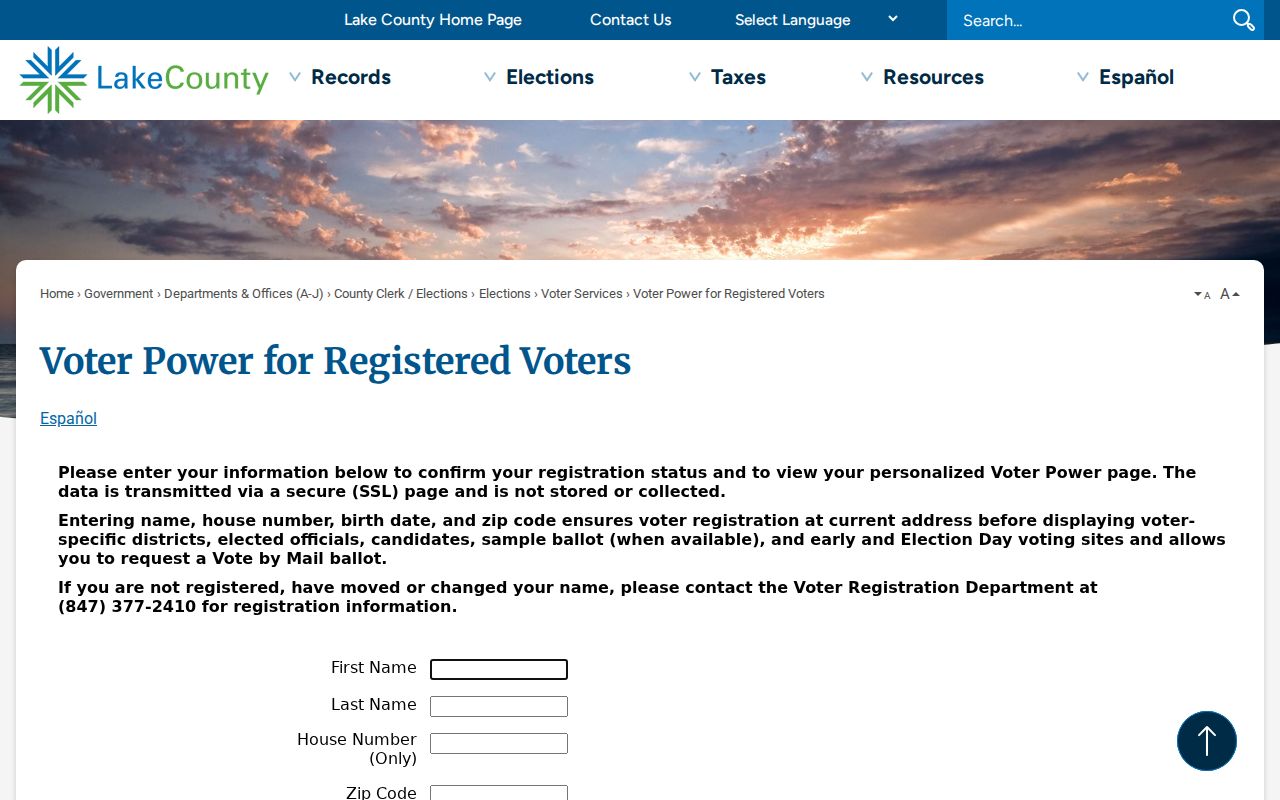
The live tool supplies current details; a saved image does not.
Lake County Court Names
Lake County offers a case search and an eCourt portal. Results may show a case number, party, filing history, status, division, judge, and public events. Sealed, expunged, juvenile, adoption, and restricted matters do not appear. A docket is a dated activity list, not the full official file.
When a portal is incomplete, the Circuit Clerk accepts mail or counter searches at $6 per name for each requested year. Ask for certification when official proof is needed.
The current court search is shown here.
Exact names, years, and case types help separate similar people.
The eCourt portal offers a second route.
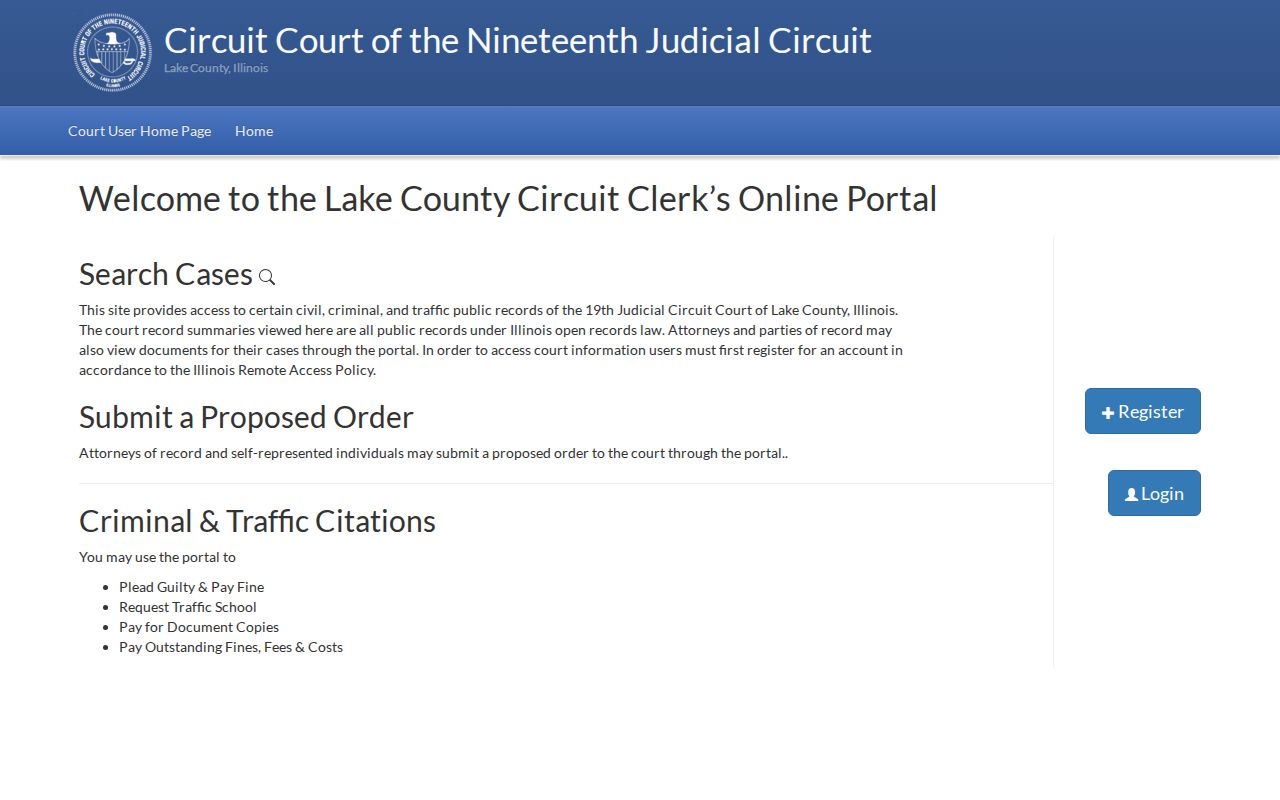
Check any summary against the Circuit Clerk's official record.
Lake County FOIA Route
The county FOIA instructions route requests to departmental officers and an online portal. Illinois agencies normally answer noncommercial requests within five business days, subject to statutory extensions. Name an existing record, date span, office, subject, and format. Do not ask for a new resident dossier.
The official page shows the submission path.
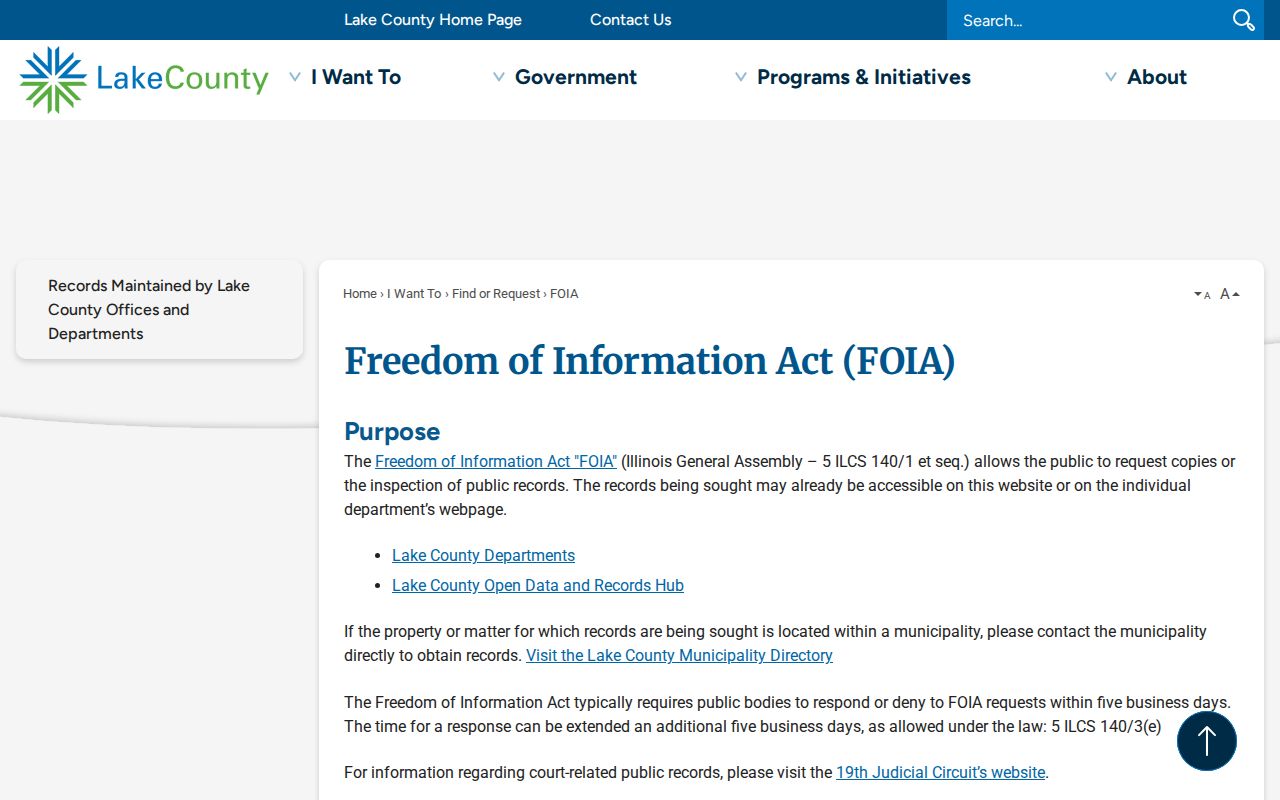
The department choice matters because each office keeps different files.
Historical Lake County Directories
Waukegan Public Library keeps directories, newspapers, HeritageQuest, Ancestry Library access, and an obituary route. Raymond Research Library adds phone books, atlases, census material, a People File, death notices, yearbooks, and historic-house files by appointment. Newberry, FamilySearch, the Bess Dunn Museum, and IRAD at Northern Illinois University extend the trail.
A printed directory is dated evidence. An entry may give a spouse, occupation, employer, or home address, but cannot prove continuous residence. The Lake County city directories page lists holdings and access channels.
Lake County's research hub connects several archives.
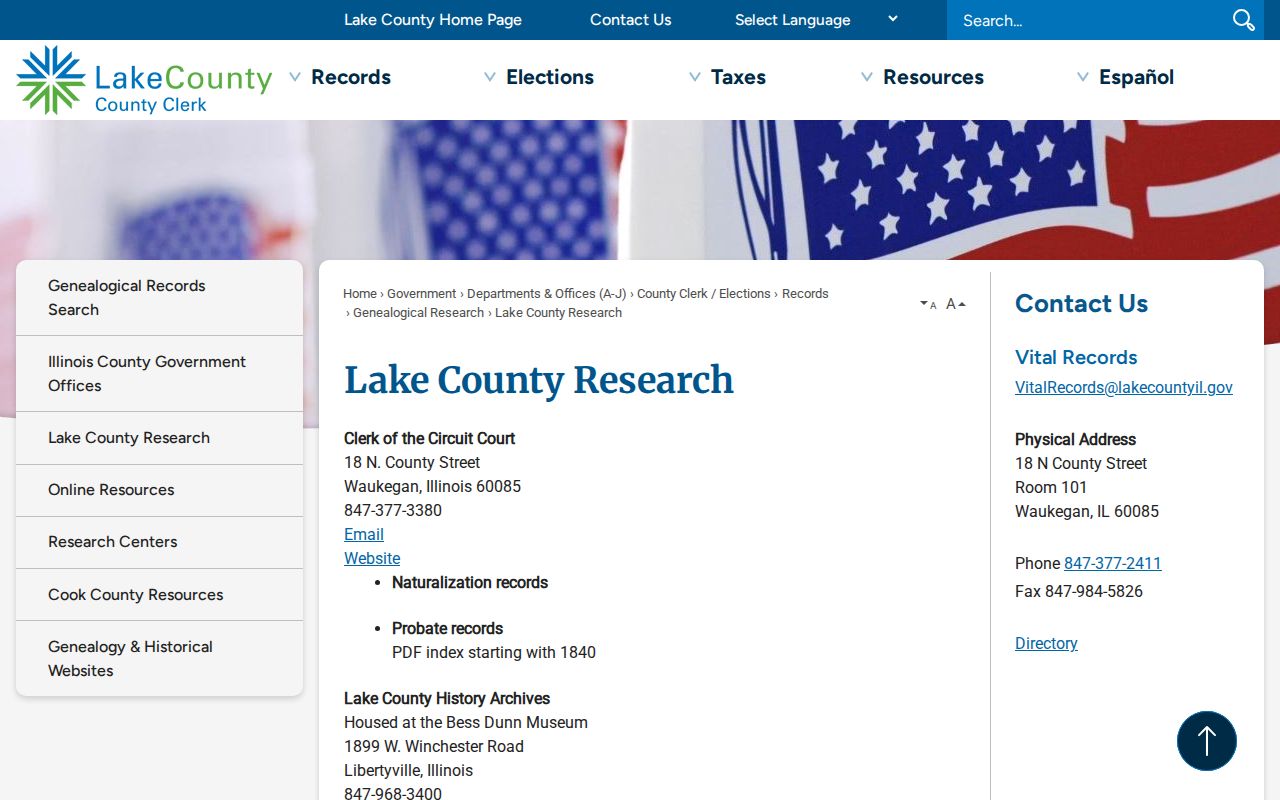
Follow collection rules before planning a visit.
Lake County Genealogy Index
The county genealogy search begins births in 1871, deaths in 1877, and marriages in 1839. A partial surname needs five letters, and the form returns at most 20 matches. Fragile originals and incomplete early registration create gaps. Illinois genealogy access generally opens uncertified births after 75 years and deaths after 20 years.
Illinois publishes current birth-record rules.
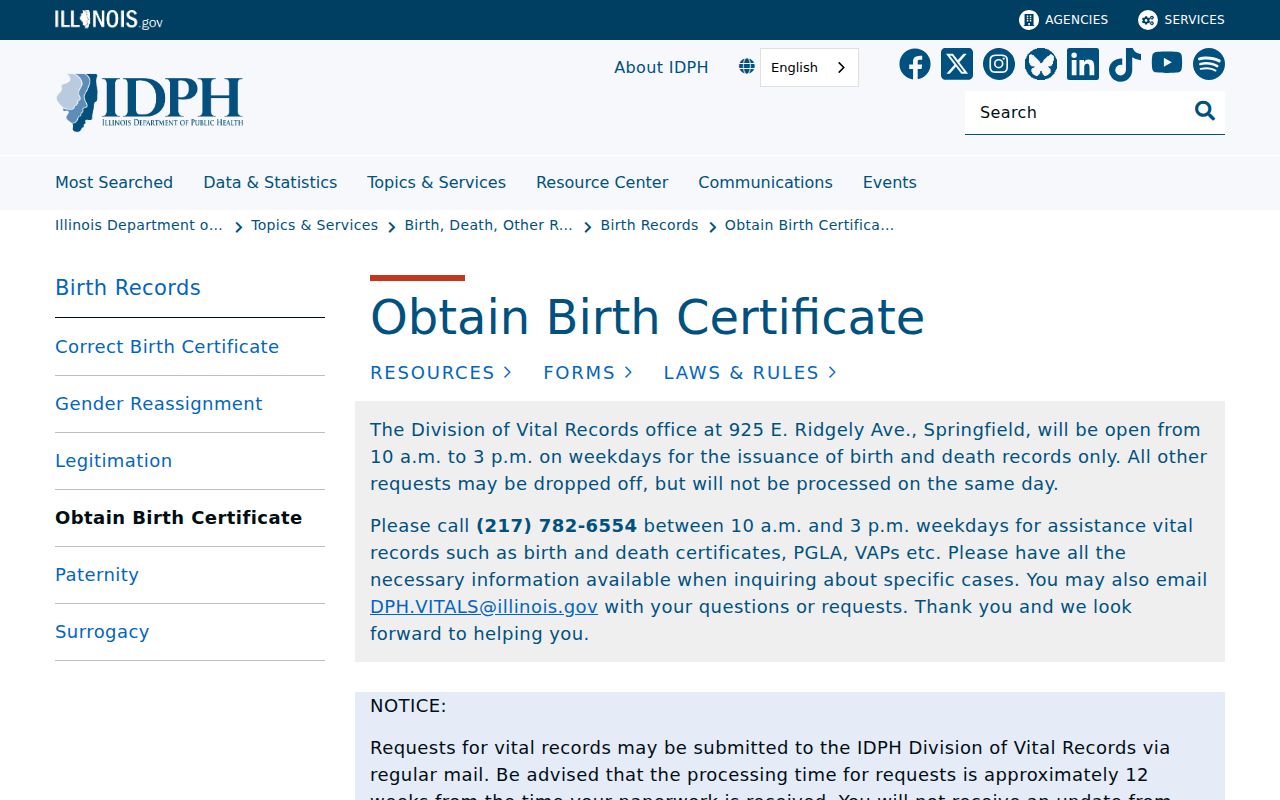
State forms cannot bypass county eligibility limits.
Lake County Lines Matter
Cities, villages, townships, and unincorporated areas do not always match postal labels. A Waukegan mailing address may not reveal which municipality, assessor, election district, or permit office holds a record. Start with the parcel and jurisdiction.
The county map clarifies those layers.
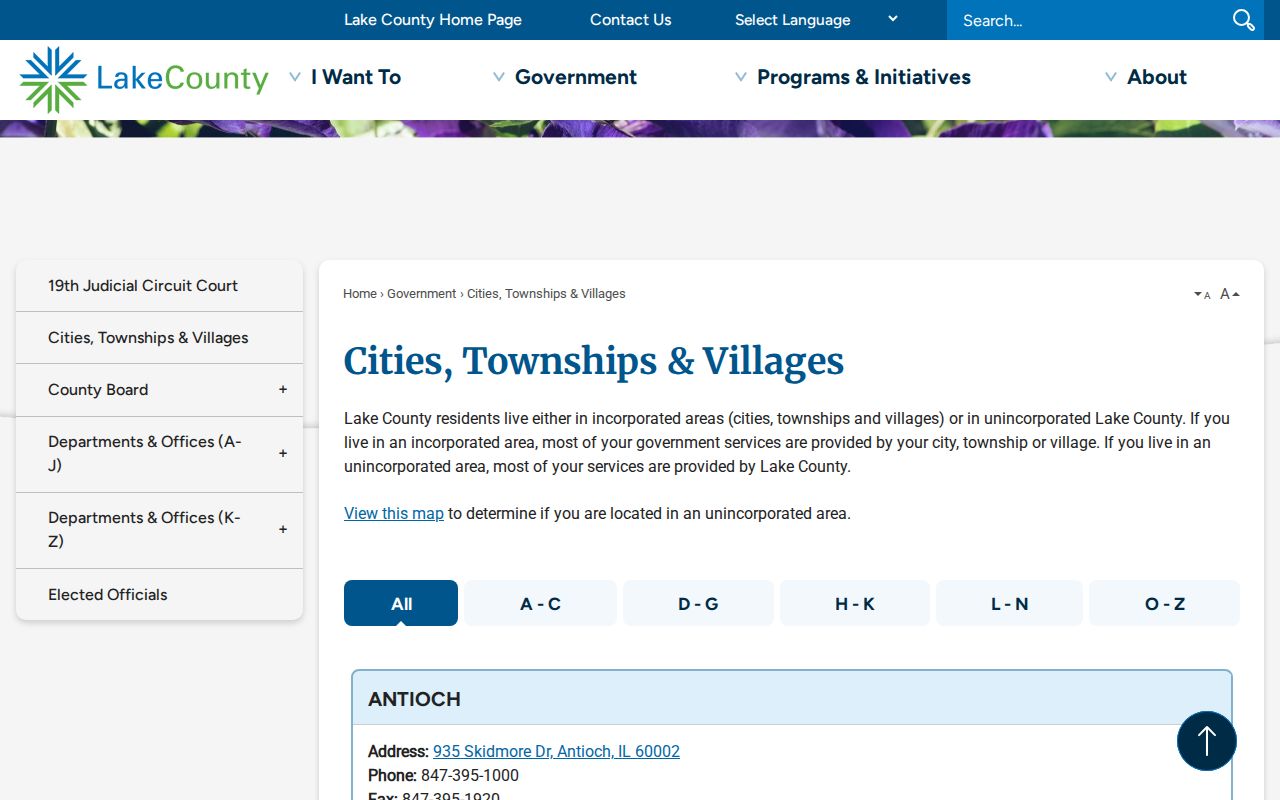
The map guides a search, while an official parcel or boundary file settles jurisdiction.
Lake County Property Clues
The property profile can carry a parcel ID, owner and billing names, situs and mailing addresses, township, legal description, assessment, sales, exemptions, tax status, and selected building traits. Treat each field by its label. A mailing address shows where a tax notice goes. An exemption reflects a tax status for a stated year. Neither field alone names every person in the household.
The advanced tax form supplies more than 60 possible criteria, including owner, street, ZIP, municipality, township, school district, year built, sales, parcel traits, and assessment ranges. It can include deactivated parcels, save criteria, remove duplicate results, and choose output fields. That depth helps distinguish the same surname in several Lake County towns. It also makes the Lake County street directory the better place for a full address-by-address walkthrough.
Township data can be incomplete or tied to a different tax year. Note the portal's update date and tax year before comparing a parcel profile with a deed or map.
Illinois Identity Cross-Checks
State records can separate two Lake County names without exposing a private household record. The IDFPR License Lookup searches by name or license number and reports the credential, number, status, effective and expiration dates, city, state, ZIP, discipline, and other licenses. It updates daily, but it does not publish a home address, email, or phone number.
The Illinois Secretary of State entity search can return an official business name, file number, type, status, formation date, jurisdiction, registered agent, registered office, and officers or managers when recorded. A registered office is an entity contact, not proof that a person lives there. The Treasurer's I-CASH search accepts a last or business name, first name, city, ZIP, and property ID. It updates weekly and requires proof for a claim.
These sources confirm a credential, entity, or unclaimed-property lead. They should support, not replace, a dated county record tied to the same person.
When Lake County Portals Fail
Keep a fallback chain. For deeds before the online cutoff, use Online Index Books, the Recording Division counter, deed books, and microfilm. For a court name that does not resolve online, send the Circuit Clerk the name, years, record type, date of birth if known, fee, and return envelope. For local history, ask Waukegan Public Library or Raymond Research Library with the exact name, spelling, address, and year already checked.
A narrow Lake County FOIA request can reach an existing permit, administrative record, or other nonexempt file that has no search screen. Vital records follow their own eligibility rules and cannot be opened merely by calling a request FOIA. Likewise, a protected or missing court entry must not be inferred from another database.
Document the outcome precisely: “not found in the public interface on August 24, 2026” is accurate. “No record exists” usually is not. A portal may lag, an index may begin late, or the material may be sealed, fragile, offline, or held by a different custodian.
Reading Lake County Records
Use the least personal data needed. Match two points such as a PIN and owner, a case number and year, or an address and directory date. Do not publish full birth dates, protected addresses, medical details, or needless family identifiers.
- Index
- A finding list that points to a record.
- PIN
- The property index number for a parcel.
- Situs
- The physical parcel address, which may differ from the mailing address.
- Certified copy
- An official copy authenticated by its custodian.
Lawful personal use. Never use Lake County records to stalk, harass, intimidate, or expose an Address Confidentiality Program participant.
Illinois ACP gives eligible survivors a substitute address for new covered records. It does not erase every older deed or tax entry. Public sources must never be joined to reveal a protected location.