
Lake County Lookup Record Map
No single Lake County roll confirms a full identity. A useful resident lookup separates the questions first. Property records connect an owner to a parcel, not necessarily an occupant. A voter tool confirms the registered voter who signs in, while controlled voter files have strict purpose limits. Court indexes identify proceedings and party names, but the courthouse file remains the official record. Vital indexes establish event leads, and certified copies follow separate eligibility rules.
| Record | What It Can Confirm | Lake County Keeper | Access Route |
|---|---|---|---|
| Court case | Party, case number, filing, status | Lake County Circuit Clerk | ShowCaseWeb, eCourt, mail, counter |
| Vital index | Birth, death, marriage, or dissolution lead | County Clerk or IDPH | Genealogy index, form, authorized copy |
| Voter status | A voter's own status and districts | Lake County Clerk | Voter Power or state lookup |
| Professional license | Name, credential, status | Illinois IDFPR | Public license search |
| Business entity | Entity name, file number, standing | Illinois Secretary of State | Corporation and LLC search |
| Unclaimed property | Name or business claim lead | Illinois Treasurer | I-CASH claim search |
Choose the row tied to the fact you need. For a current professional, search the credential. For a family event, use the vital or genealogy channel. When the goal is a present address, the property roll supplies an ownership lead, and the Lake County street directory explains the address-centered route without turning ownership into proof of residence.
Search Lake County Court Names
The Lake County ShowCaseWeb search offers Case Search and Citation Search. Its visible controls include judge, division, status, court type, and three match modes: Exact, SoundEx, and Starts With. Begin with exact spelling. SoundEx can catch names that sound alike, while Starts With helps when an ending or full business name is uncertain. Search each relevant tab because one screen does not represent every case type.
A result is a lead, not a complete identity. Save the case number and open the case summary. Compare the displayed party role, filing date, division, judge, status, hearing dates, docket events, and disposition. The one-row-per-case option can hide the fact that a case has many events. Public summaries may omit sealed, expunged, juvenile, adoption, mental-health, or otherwise restricted material.
| Result Field | Why It Matters |
|---|---|
| Case number | Separates one file from a similar name |
| Party and role | Shows how the name enters the case |
| Filing and status | Dates the event and shows whether it remains active |
| Docket event | Points to an action in the case history |
| Portal notice | Marks the summary as distinct from the official file |
When online fields are not enough, the Circuit Clerk record-search procedure accepts mail or in-person searches by person or business name, years, case type, and date of birth for an individual. The researched fee is $6 per name per year. Mail requests need a self-addressed stamped envelope and an accepted form of payment. The courthouse counter and public e-filing kiosks provide a human fallback.
Verify One Lake County Resident
Same-name errors are the main risk in a Lake County resident lookup. A middle initial, an address, or a date may separate two people, but no one field should do all the work. Use a dated primary record, then seek an independent bridge from another custodian. Keep the spelling shown by each source, including former surnames and business-name forms.
- Write down the full name and every known variation. Add a date or Lake County place only when a reliable source supports it.
- Search the most relevant official index. Preserve its case, file, license, or certificate number and the date shown.
- Check a second official source for a matching name plus a separate fact, such as an event date, parcel, or business file.
- Ask the custodian for the official file or an authorized certified copy when the distinction matters.
- Docket
- The dated list of actions filed or recorded in a court case.
- Index and image
- An index points to a record. An image reproduces the filed page and may have tighter access rules.
- Certified copy
- A copy authenticated by the office that keeps the original record.
- Disposition
- The recorded outcome of a case or charge, not merely the fact that it was filed.
Lake County Vital Index Clues
Vital records can resolve dates and family links, but Illinois does not treat an index and a certificate as the same thing. The Lake County Genealogical Records Search provides historical leads. Its landmarks include marriages from 1839, births from 1871, and deaths from 1877. The search accepts partial names with a minimum entry and returns no more than 20 results, so narrow common surnames with the known record type or period.
The Lake County Clerk issues local certified records to authorized requesters. IDPH handles statewide routes under its rules. Genealogical access opens for an uncertified birth at 75 years and an uncertified death after 20 years, yet that does not create a general right to a certified copy. IDPH marriage and dissolution verification begins in 1962. A certified marriage copy comes from the county clerk, and a certified divorce order comes from the Circuit Clerk.
The county search screen shown by the source helps distinguish a name-index lead from a certificate request. View the official genealogy search before using its fields.
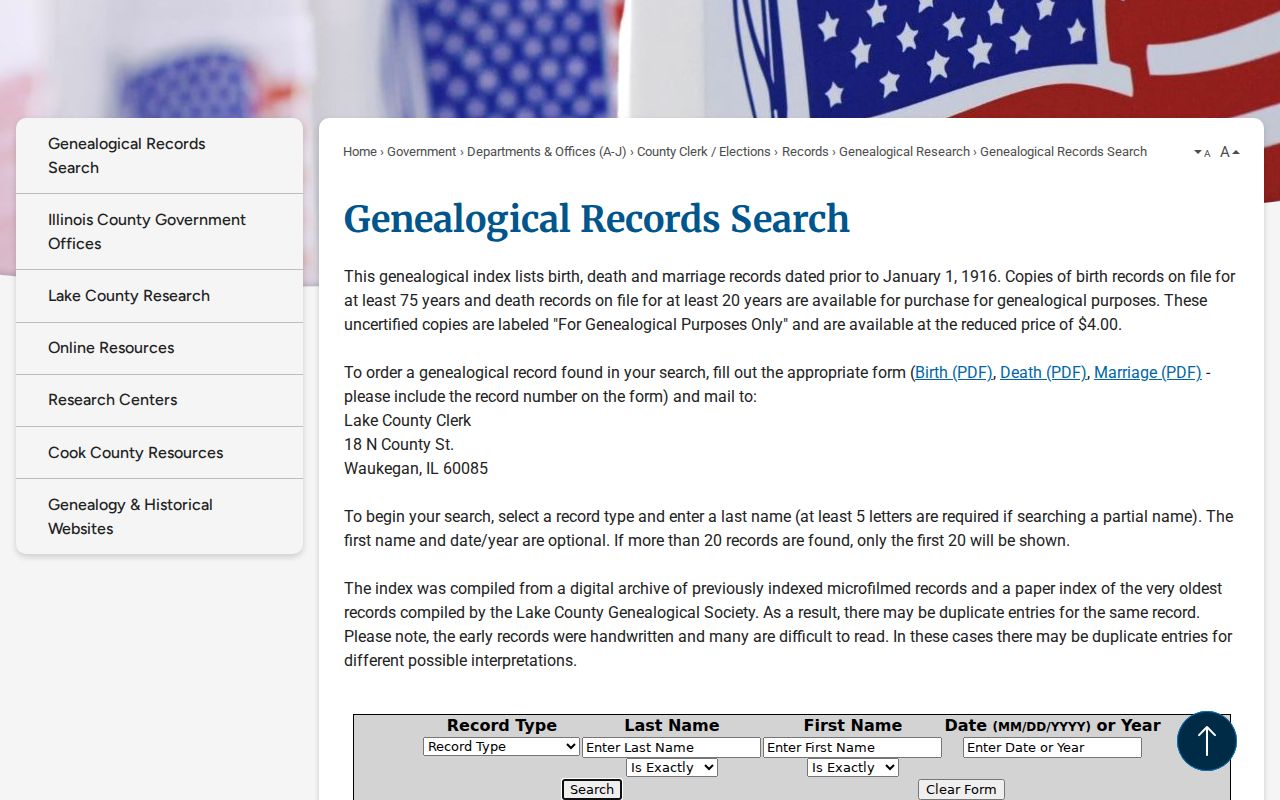
The image places the search at the county custodian, where coverage notes and result limits can be checked before an order is made.
Note: An obituary, directory entry, or tax record may support a family trail, but none substitutes for an authorized vital certificate.
Trace a Lake County Heir
An heir search is one of the strongest personal uses for a resident lookup. Start with probate and court materials. Current Lake County cases route through the Circuit Clerk, while the IRAD Lake County circuit-case index covers more than 2,400 files from 1841 through 1898, with noted exceptions in 1840 and 1902. Its plaintiff, defendant, date, and case-number fields can expose an older estate or dispute, but the archive warns that files may be missing.
Next, compare funeral-home notices, obituaries, recorder transfers, and the Illinois Treasurer I-CASH search. I-CASH is updated weekly and accepts a person or business name. A match starts a claim process and requires proof; it is not a current contact directory. Probate identifies a case, a death notice can name relatives, and a recorded transfer can connect the estate to land. Agreement among them is more useful than a single broad name hit.
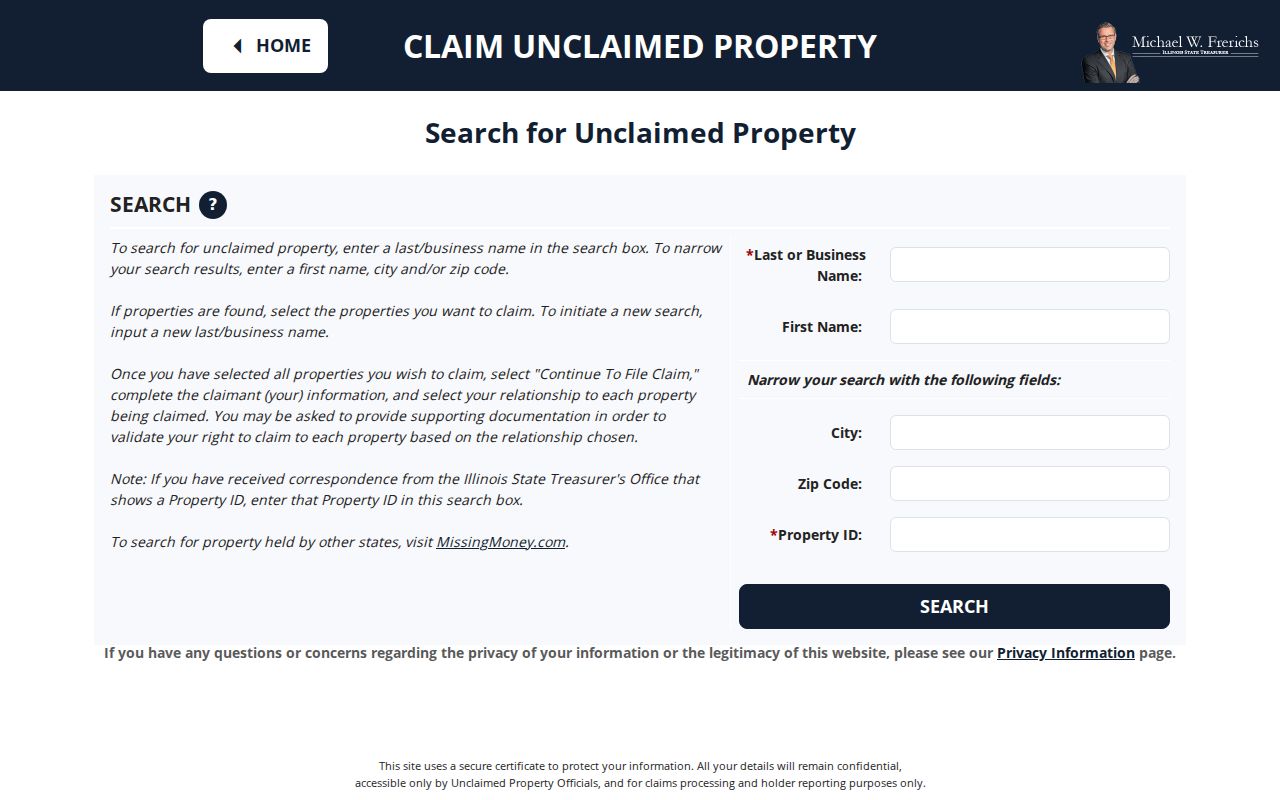
The I-CASH screen adds a state-held property lead to the local probate and obituary trail without claiming where a person now lives.
Confirm Lake County Credentials
A name attached to a trade or regulated profession should be checked in the Illinois IDFPR License Lookup. Search the name or license number and record the profession, credential number, status, and any dates the result provides. The result confirms a state credential record. It does not prove a home address, and a business or mailing ZIP should not be read as one.
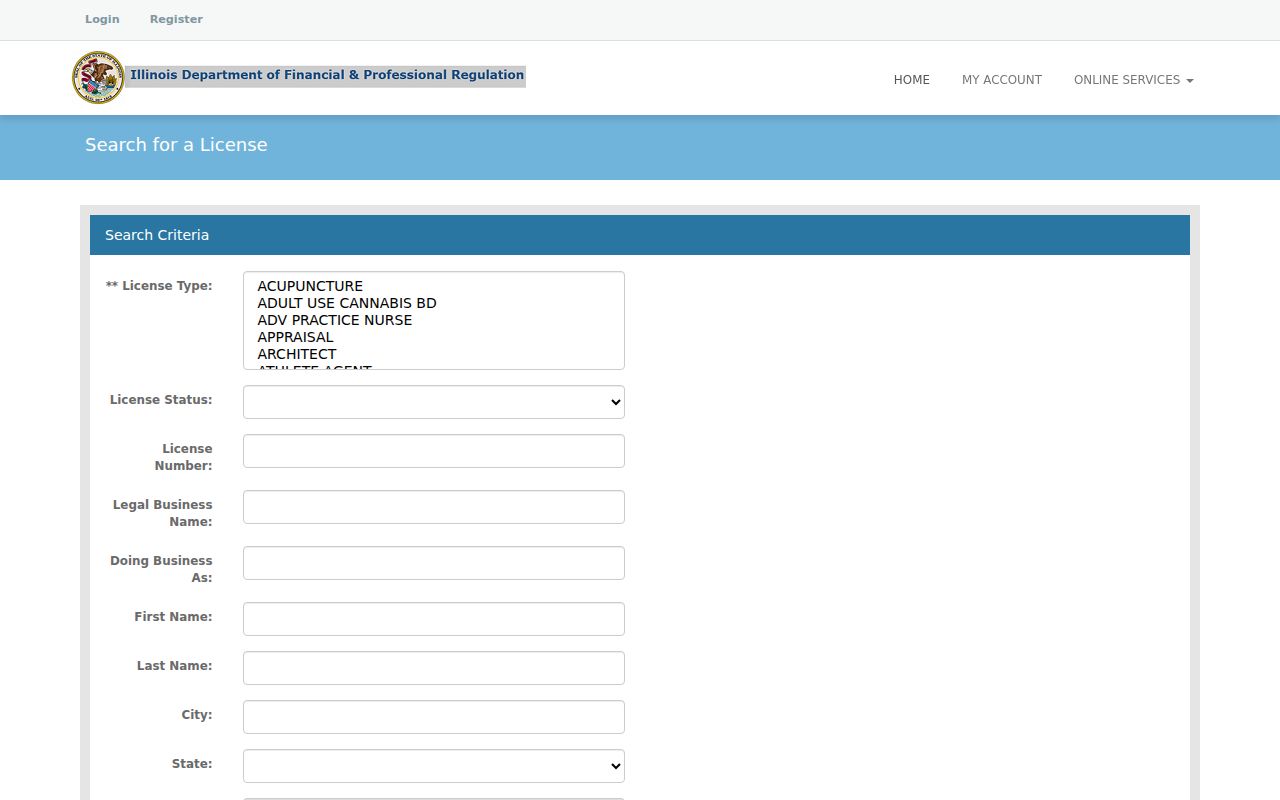
The captured license-search screen is useful because it keeps the query tied to the regulator rather than a compiled profile.
For an organization, use the Illinois Secretary of State corporation and LLC search. Entity results can show a legal name, file number, type, status, and registered office details. Those facts verify the organization. They should not be stretched into claims about a named person's current residence.
Lake County Voter Power Limits
Lake County Voter Power is a personal confirmation tool. A registered voter can review registration status, name and address, districts, sample ballot when available, voting sites, elected officials, ballot style, and vote-by-mail tracking. The live fields are presented through a dynamic embedded tool, so no extra field labels should be assumed.
Bulk voter data follows another path. Lake County limits electronic files to bona fide political committees and qualified government entities for permitted political or governmental purposes. The request form offers district and election-history choices, several file formats, and a researched cost of $10 setup plus $1 per thousand records. Illinois law also redacts or restricts sensitive fields under 10 ILCS 5/1A-25. A resident lookup for personal research must respect that line and never imply an open street-by-street voter directory.
Request Missing Lake County Records
A no-hit means only that the chosen interface did not show a result. Change the spelling mode, search the correct case or record category, and check whether the event belongs to another custodian. Historic court files may be at IRAD. A certificate may require an IDPH form. Complete and certified court files come from the Circuit Clerk, not from a portal summary.
For non-exempt county administrative records, Lake County accepts requests through its Freedom of Information Act procedure. Illinois FOIA, 5 ILCS 140, ordinarily gives a public body five business days to answer, subject to statutory extensions and exemptions. Describe the record, office, and date range instead of asking the county to locate a person generally. Do not use FOIA to bypass vital-record eligibility, sealing, or voter-file restrictions.
Lawful Lake County Resident Lookup
Some people are absent by design. Illinois's Address Confidentiality Program, created under 750 ILCS 61, provides eligible survivors with substitute addresses in new state and local records. Courts also restrict sealed, expunged, juvenile, adoption, and mental-health material. Birth and death access follows the Vital Records Act, 410 ILCS 535, and voter disclosure has its own redaction rules.
Stop when a source signals protected status. Do not infer a hidden address from relatives, parcel mail fields, or nearby records. If an open record is wrong, contact the office that created it and use that custodian's correction process. A commercial profile cannot overrule the official file, and repeated compilation often carries old or mismatched data.
Lawful use. Use a Lake County resident lookup only for lawful personal research. Never use records to stalk, harass, intimidate, or harm anyone.